
Few experiences capture a city’s vibe—or offer a boozier way to get a feel for a place—than a multi-venue music showcase. From SXSW to The Great Escape, these festivals let visitors explore local haunts, soak up the culture, and wander on foot. It was the best way to catch a city’s true rhythm.
Nürnberg might not top most lists of German nightlife destinations, but it was built for a laid-back yet engaging boutique festival. And, as it turned out, the Nürnberg Pop Festival revealed that the city had a few secrets up its sleeve.
The city felt both intimate and expansive: small enough to stroll everywhere, yet big enough to surprise at every turn. Postcard-perfect streets—cobbled lanes, half-timbered houses, a castle on the hill—only hinted at what was really happening here.
Tradition and modernity merged seamlessly: Rotbier in old taverns, foamy, colorful creations in cramped student coffee joints. Hearty fare—pork knuckle and every imaginable sausage—sat comfortably alongside eight Michelin-starred and 15 Gault & Millau establishments. Exploring was also effortless. And with friendly locals and professional venues, everything ran like clockwork, making navigation and transport smooth and easy.
Friday, October 10, 2025
I landed in Nürnberg half-expecting a weekend of sausages, steins, and maybe a brass band or two, and that might all be true. This is Bavaria, after all. But the Old Town hid plenty of surprises among its cobbled streets and 13 hosting venues. Founded in 2011 to kickstart the local scene, the Nürnberg Pop Festival had quietly become one of Germany’s most charming urban showcases.
It was a welcome change from the usual festival formula: no muddy fields, no endless queues, no £5 bottles of water. Instead, the city center became the stage. Gigs popped up in art galleries, ruined churches, and even on tram cars. We could walk everywhere, surrounded by real life. The event was calmer, better organized, and far more engaging than most of the weekend festivals vying for attention. It served as a powerful reminder that the best experiences don’t need the stress and capitalist clutter that typically spoils large-scale gatherings.
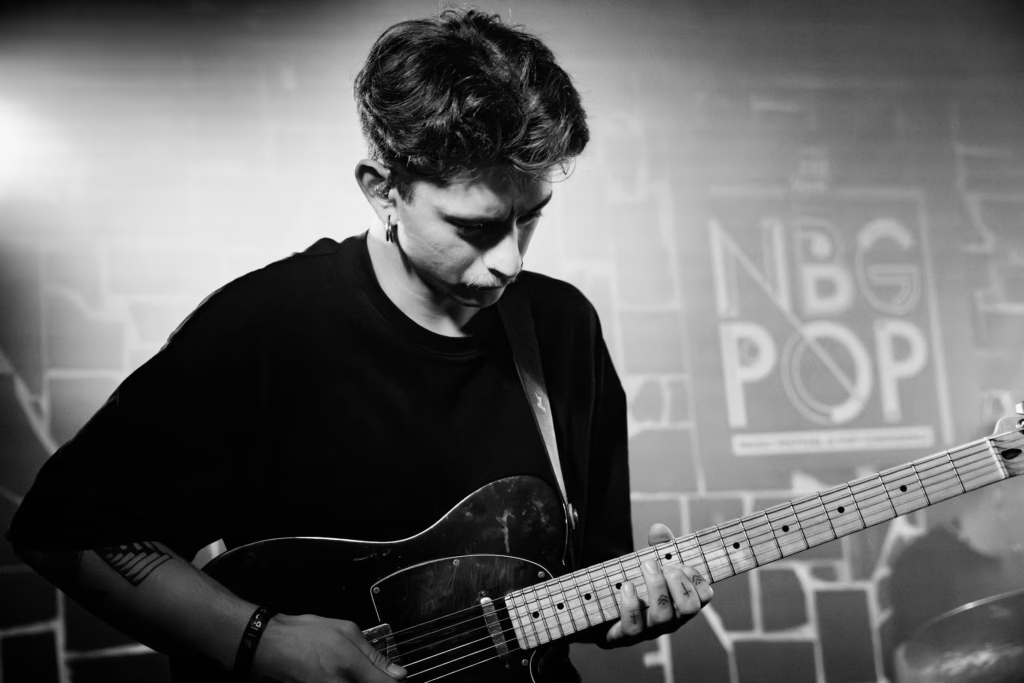
After an evening of opening ceremonies and delegate hangouts, Friday was when things really got moving. Friedrich, a dreamy, shoegazey four-piece was the first act to catch. They were playing in Club Stereo, a low-ceilinged, wonderfully dingy basement venue that surprisingly had incredible acoustics.The band was in tight form, the frontman commanding the stage, and the younger crowd lapped up their textured sound. Proof that the guitar pedal revival had gone truly international.
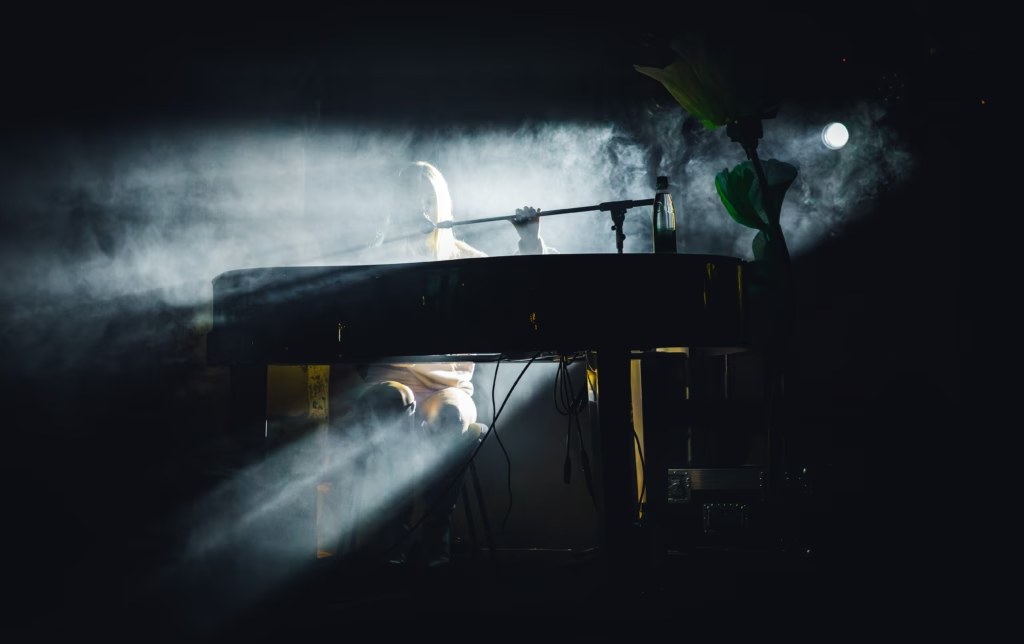
Ellice took the stage at Katharinenruine, the skeletal remains of St. Catherine’s Church. The building was originally bombed in WWII and has since been reborn as an open-air stage. Her pop set drew a loyal crowd pressed tight against the barrier, screaming so loudly it caught her off guard in the sweetest way. The sound was crisp, the setting unreal. It was one of those venues that made you forget to take notes because you were too busy watching. With backup dancers, a pianist, and robotic light-up flowers swaying to the music, it was a slick, surreal affair—a perfect contrast to the crumbling stone backdrop.
For a change of pace, I caught Albert af Ekenstam at Kunsthalle, the city’s contemporary art gallery. His blend of post-punk and jazz made for a slow-burning set that suited the space perfectly.
Jolle at Festaal was clearly the hot ticket of the evening. The band drew a wall-to-wall crowd of the young and beautiful; it was too jammed to even catch a glimpse of the stage. Instead, I headed to catch Bazzlooka featuring Mamaste, who offered a different kind of spectacle.
At first glance, the one-man-band setup suggested experimental reggae and folk rock. But the real show lay in the mechanics. With a Korg Nanopad connected to his acoustic guitar, he played drum samples and bass notes live, all manually, without a single loop. The performance was both astonishing and absurdly dexterous, radiating mad-scientist energy—like Doc Brown trading the DeLorean for an effects pedal.
The night closed with Pako Ping, an upbeat rapper who leaned on old-school samples to give his Gen Z flow a backbone of classic melodies. Loose, playful, and irresistible, it was exactly the kind of set you wanted to stumble into at that hour. The evening wound down at BALKON, a small local bar filled with residents and cracking dub spinning on vinyl. Knees aching from hours of walking, festivalgoers learned quickly that the Old Town doubled as a mazelike map. The cobblestones were charming but a harsh mistress.
Saturday, October 10, 2025
Saturday afternoon began with a coffee and a chat with David Lodhi, the festival’s co-founder and owner of Club Stereo, the same basement I’d caught Friedrich in the night before. Lodhi spoke about his goal: putting Nürnberg’s music scene on the map. He wants to prove the city isn’t just about Christmas markets and medieval architecture, but instead has a genuine local pulse. It wasn’t just his passion to give this part of the world a platform, though. It was about European music as a whole.
It made sense. Nürnberg is heavy with history but clearly looking forward. Just a few blocks away, the Nürnberg Future Museum—an offshoot of Munich’s Deutsches Museum that opened in 2021—blends technology, science, and playful installations. Inside, visitors could literally chat with a robot. Outside, golden leaves drifted down from beech trees lining the cobblestones. It was weird and wonderful, the perfect German mix of precision and poetry.
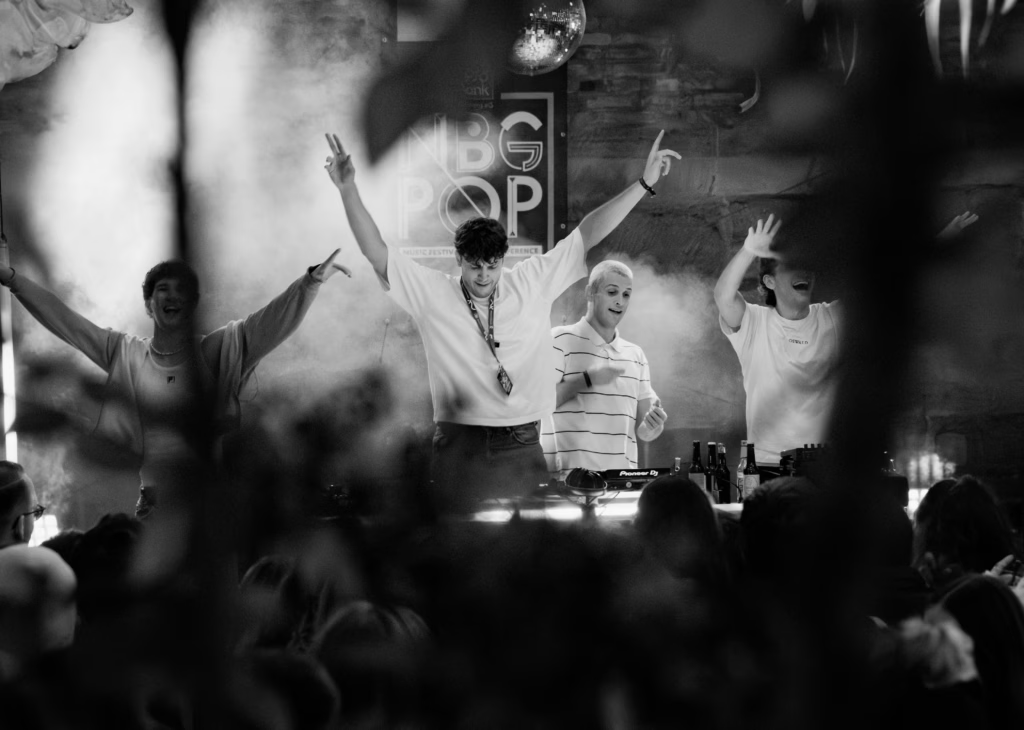
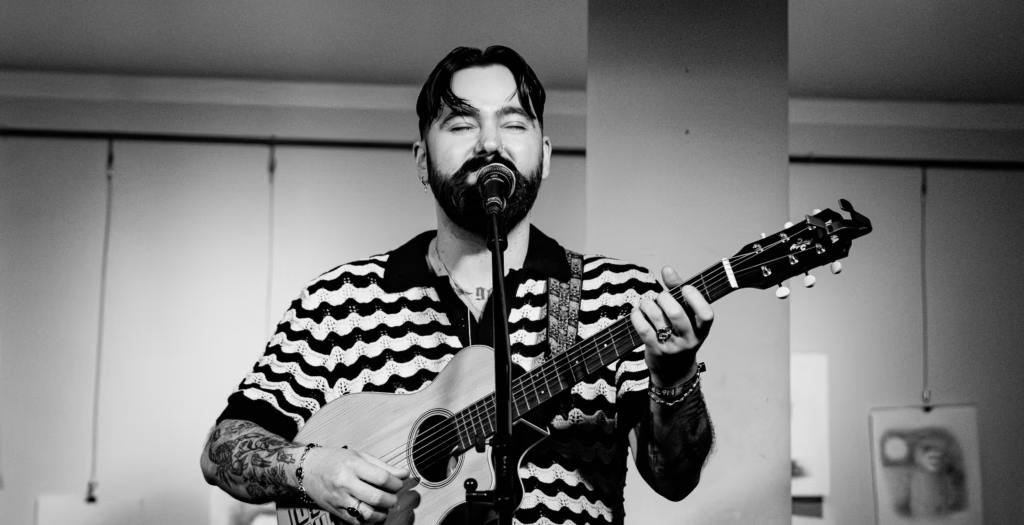
Later, Faroese Music Export’s showcase served as a delightful interlude to reunite with old acquaintances over a few fine beers. The vibe was loose and friendly—a proper hangout. In an intimate bar set, Danny & the Veetos delivered strong harmonies and a compelling folkish charm. It was the kind of gig where everyone instinctively tapped along. They even played a song that captured the familiar worry of a mother back home while her son is off touring. Cheesy? Perhaps. But the performance felt genuinely heartfelt, tapping into that timeless story of the beloved son exploring the world.
Munich’s Wait of the World switched gears into full early-2000s emo energy: all passion and heart-on-sleeve choruses. It was undeniably fun, with frontman Ben Hutchison-Bird throwing himself into it completely. Sweat, sincerity, and enough nostalgia filled the room to make you reach for your old studded belt.
Of course, no European trip would be complete without at least one moment of dance music confusion. This time it was Oswald. From the edge of the stage, it looked like one DJ and a few hammered friends dancing to pop-leaning house and techno tracks—often built around borrowed hooks. For those packed into the outdoor Kulturgarten stage, though, it was pure joy. The crowd moved, the beer queue buzzed, and the energy was wild. Maybe it’s a German thing, but all power to them.
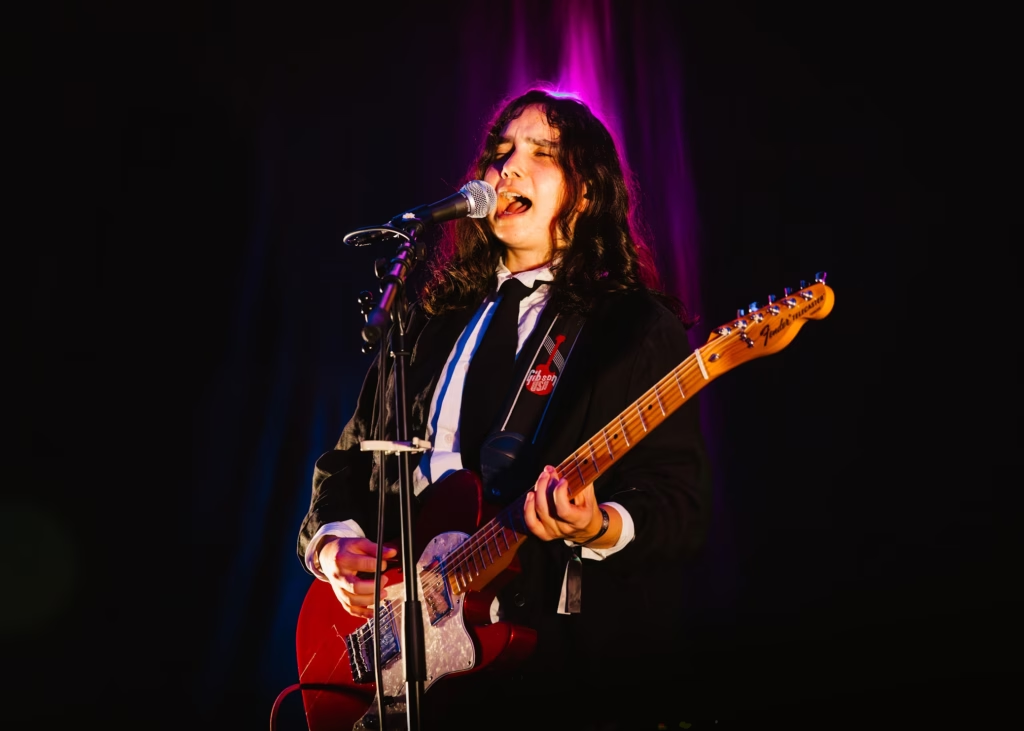
Francis of Delirium followed, and was easily the weekend’s standout. Fierce, emotional, and effortlessly gripping, they balanced raw nerve and melodic pull like it was nothing. Every song landed hard, and you could feel the room tighten and breathe as one. It was one of those rare moments when a band feels on the brink of something bigger. Having already toured with The 1975, Soccer Mommy, Horsegirl, and Kings of Leon, it’s not hard to see why. Their music carried great emotion: honest, unfiltered, and completely magnetic.
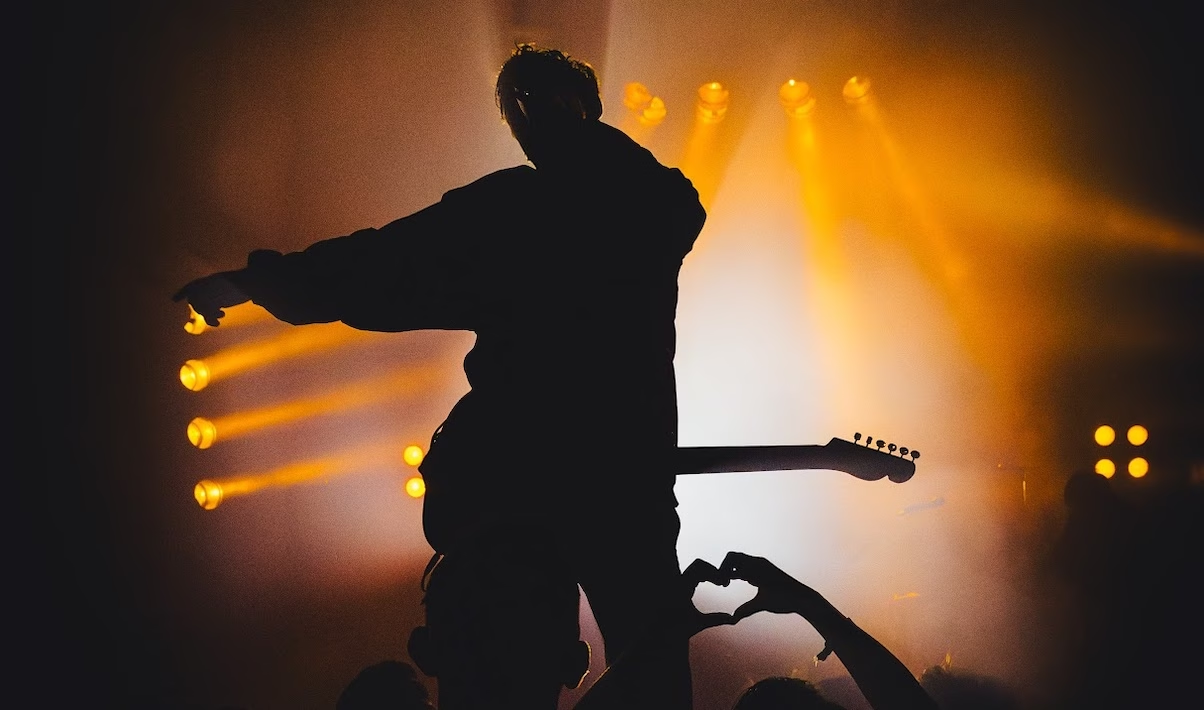
Blackout Problems closed Saturday night with full-blown production: lights, smoke, sweat, the lot. They went hard, pushing every chorus to the breaking point—and it paid off. Big, loud, and unapologetically anthemic, the set featured climbing stage rigging, overdriven fog machines, and guitar solos cutting through the haze in silhouette. With a sound that swung from pummeling drums and jagged riffs to widescreen, Linkin Park-style atmospherics, they were easily the most showbiz, attention-grabbing act of the weekend—a perfect closing blast.
Here’s the thing about the Nürnberg Pop Festival: it doesn’t compete with the big festivals. It’s not about scale; it’s about place. The Old Town becomes a living, breathing map of sound, and every corner has a bit of noise or conversation spilling out of it. The curation was smart, the atmosphere open, and the sense of community unmistakable.
By Sunday night, the value of a festival like this hit hard. Music happened in real places, not temporary stages. Nürnberg knew how to host, how to listen, and how to make visitors feel part of something bigger. Nürnberg Pop didn’t shout for attention. It quietly got it right.