
It’s been 10 years since David Bowie passed away in 2016. A beloved musician, actor, and activist — these are just a few of the titles the world associated him with. But above all, he was a visionary of the arts. One who unapologetically challenged the conventional and embraced every facet of who he was.
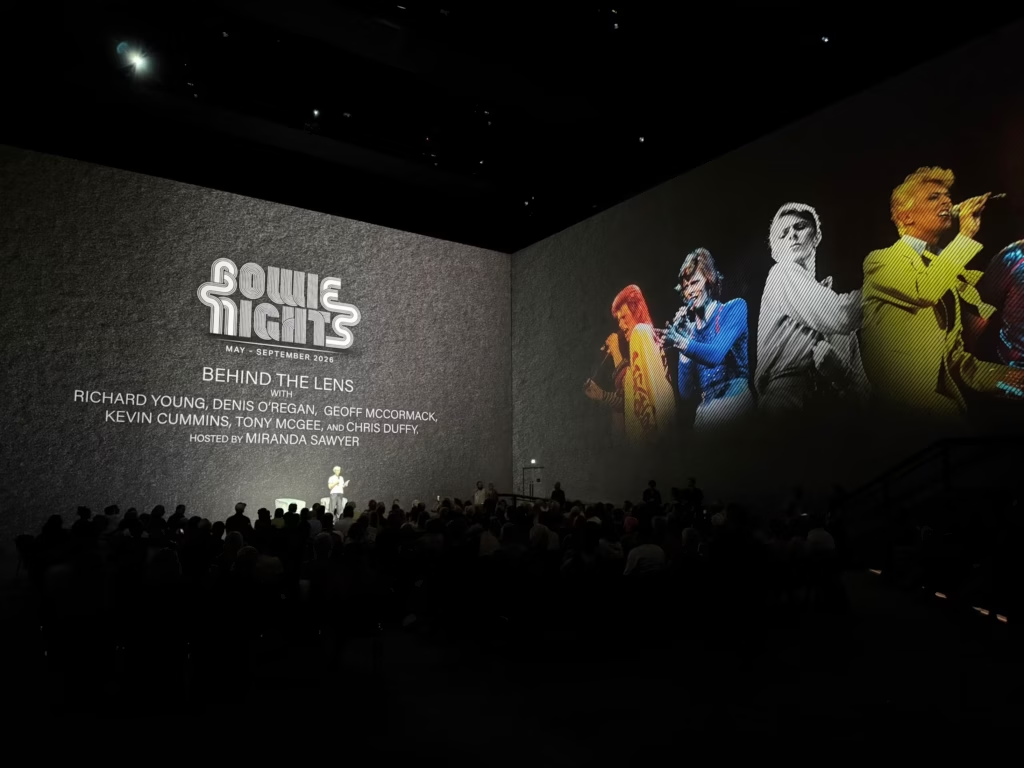
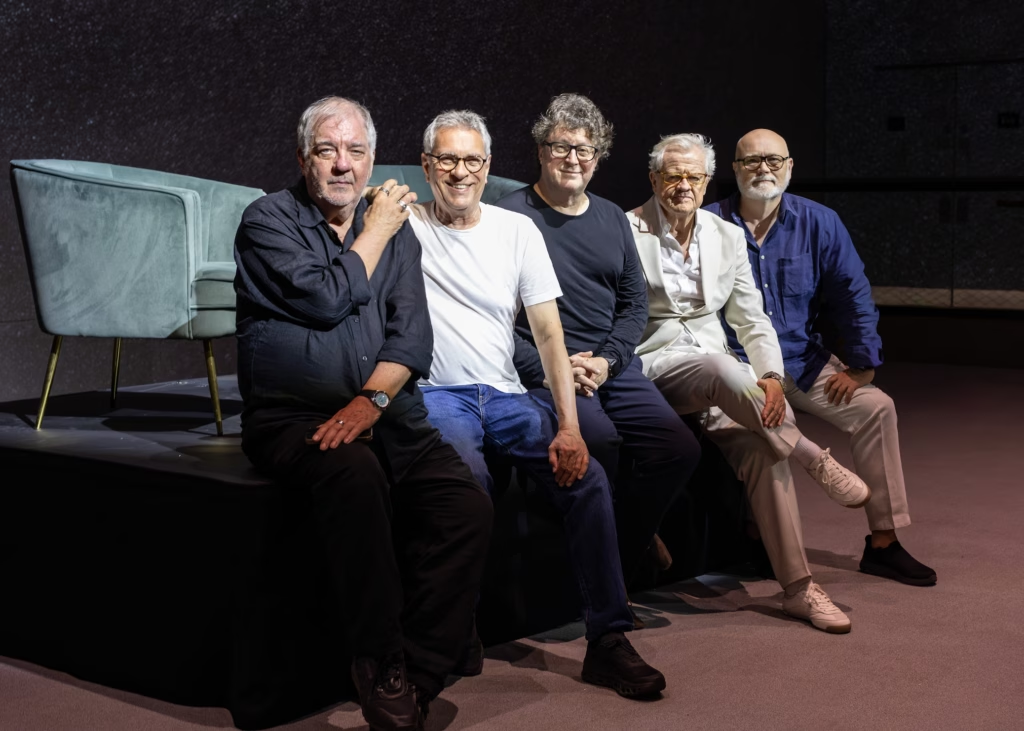
On May 26, Lightroom held a special evening to celebrate that legacy. Hosted by panel moderator Miranda Sawyer, the “Bowie Nights: Behind the Lens” event explored unseen and industry-famous footage of Bowie through the lens of six renowned photographers who worked closely with the artist throughout his career.
It may have been Tuesday, but Lightroom was stacked with Bowie memorabilia and fans that filled every corner of the room. “He was a visual being as well as a musician,” said Sawyer, describing a quality that many Bowie fans, friends, and collaborators would testify to. During a panel discussion, each photographer presented their work and discussed different takes on Bowie throughout the years.
Walking onstage to “Changes,” prolific photographer Richard Young presented three images of Bowie, each from a different period of his life. Known for capturing some of the greats of Rock n’ Roll, from Bowie to The Rolling Stones and Queen, he revealed a particularly intriguing photograph of the artist standing in front of a provocative painting inside the Imperial War Museum. Bowie had purchased several of them, disgusted that the museum displayed such graphic depictions of sexual violence against women. It was a small yet telling gesture. And a fragment of the activism he would go on to pursue throughout his life.
The story behind the photograph captures just a fragment of Bowie’s activism. Throughout his career, he was a prominent voice for change across several causes. In a 1972 interview with Melody Maker, Bowie stated, “I’m gay. And always have been, even when I was David Jones.” At the time, the gay community faced persistent discrimination. The year before, hundreds had walked the streets of London for the Gay Liberation Front protests. Bowie’s willingness to speak so openly, at a time when gay people were being killed for simply existing, showed courage that would later influence countless others to come out.
A decade later, he criticised MTV’s exclusion of Black artists on national television. “I’m just floored by the fact that there are so few Black artists featured on it. Why is that?” he asked.
In the three images Young presented, each told a different story. The photograph at the Imperial Museum carried the weight of his activism and philanthropy. The black and white shot of Bowie performing in The Elephant Man was a reminder of just how many stages he had conquered. And the witty collage alongside Sir Paul McCartney showed the friendships that existed beyond fame. None of the images were alike, and perhaps that was always the point.
Often coined as a chameleon by the press, Bowie never stayed in one character for too long. In 1979, The New York Times called him “Rock’s Cunning Chameleon.” In 2016, Vogue described him as “the Ultimate Beauty Chameleon.” His kaleidoscopic nature was reflected across every image the photographers displayed.
The general public knew Bowie for his otherworldly, charismatic poise on camera. But English photographer Denis O’Regan captured something else entirely: a lovable vulnerability. A side often forgotten. Under all the stardom, wisdom, and glamor, Bowie was still just a human. And like everyone else, he was fighting his own daily battles. The main difference: he was reshaping the future with artistic values and cultural views that were way ahead of his time.
“He’s putting on a costume. So he became a performer on stage. But there wasn’t much difference between the two,” O’Regan said. “David was very down to earth.”
If you’re a die-hard Bowie fan, chances are you’ve heard of Geoff McCormack. McCormack wasn’t just a collaborator; he was a close friend, having known Bowie since they were eight. He travelled with him from 1973 to 1976, mostly by train and boat, as Bowie didn’t like to fly. That closeness shows in the Trans Siberian Express (1973) photo, another vulnerable shot of Bowie.
On which photo from their time together meant the most, McCormack said, “They all have a special place for me because they’re quite intimate.”
A recurring theme of the evening was the lengths photographers went to catch Bowie live in action. Kevin Cummins reflected on sneaking into a concert at Rollarena Leeds in 1973. “It’s all about blagging,” he said. “Photographing Bowie was like trying to get a picture of the Eiffel Tower. It’s already been photographed, but what can you do to make it different?”
The evening closed with Chris Duffy’s selection of images—the Aladdin Sane album cover shoot. It was the first truly recognizable piece of the night and arguably the most iconic brought to life in a magical burst of color with immaculate definition.
“Bowie Nights: Behind the Lens” was an honorable night that commemorated the anniversary of the singer’s death. A reminder of his candidness, his appetite for the usual and a celebration of the greatness he achieved in his 50-year spanning career.